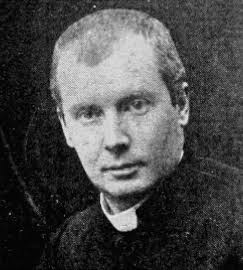
 The Rt. Rev. Sir David Oswald Hunter-Blair, 5th Baronet (September 30, 1853 - September 12, 1939) was a Scottish baronet, prominent Benedictine monk, Catholic abbot, author,
and close collegiate friend of Oscar Wilde.
The Rt. Rev. Sir David Oswald Hunter-Blair, 5th Baronet (September 30, 1853 - September 12, 1939) was a Scottish baronet, prominent Benedictine monk, Catholic abbot, author,
and close collegiate friend of Oscar Wilde.Queer Places:
Dunskey Estate, Portpatrick, Stranraer DG9 8TJ, United Kingdom
Eton College, Windsor SL4 6DW, United Kingdom
University of Oxford, Oxford, Oxfordshire OX1 3PA
Fort Augustus Abbey Cemetery, Fort Augustus PH32 4BJ, UK
The Rt. Rev. Sir David Oswald Hunter-Blair, 5th Baronet (September 30, 1853 - September 12, 1939) was a Scottish baronet, prominent Benedictine monk, Catholic abbot, author,
and close collegiate friend of Oscar Wilde.
Born into a wealthy and historic Scottish landowning family, he was the eldest son of Sir Edward Hunter-Blair, 4th Baronet. He was educated at Eton College and later attended Magdalen College, Oxford, where he graduated with a B.A. in 1876 and an M.A. in 1878. At Oxford, he was widely known by the nickname "Dunsky" (derived from the Dunskey Estate) and moved in both boisterous aristocratic circles and intellectual literary groups.
While traveling in Europe in 1875, Hunter-Blair converted to Roman Catholicism—a significant and counter-cultural step for a Victorian aristocrat. He subsequently entered the Benedictine order, taking the religious name Dom Oswald, and was later appointed a Chamberlain of Sword and Cape to Pope Leo XIII. He served as the Abbot of Fort Augustus Abbey in Scotland from 1913 to 1917.
Succeeding his father as the 5th Baronet in 1896, Hunter-Blair balanced his aristocratic responsibilities with extensive writing. He contributed articles to the Catholic Encyclopedia, published memoirs of his youth (including In Victorian Days in 1939), and maintained a lifelong dedication to historical preservation and education.
Hunter-Blair’s historical and literary footprint is deeply intertwined with early LGBTQ+ history through his formative relationship with Oscar Wilde:
During their undergraduate days at Oxford in the mid-1870s, Hunter-Blair was one of Wilde’s closest confidants. As noted in personal memoirs, Hunter-Blair actively assisted Wilde in decorating and furnishing his undergraduate rooms at Magdalen College—rooms that would become famous for hosting Sunday evening salons where students gathered to listen to Wilde's early wit, paradoxes, and poetry.
Unlike many contemporaries who distanced themselves from Wilde later in life due to societal prejudice, Hunter-Blair remained a sympathetic figure from their youth through Wilde's trials and subsequent downfall. Because of their deep university bond, Wilde often expressed his inner spiritual and "Catholic self" most openly to Hunter-Blair.
Modern queer scholarship and biographers rely heavily on Hunter-Blair's memoirs (In Victorian Days) to separate romanticized myth from reality regarding Wilde's university years. Hunter-Blair's firsthand accounts offer an unvarnished, affectionate portrait of Wilde before his public notoriety, providing crucial context for the development of Wilde’s aesthetic and intellectual persona.
References:
 Bachelors of a different sort: Queer aesthetics, material culture and the modern interior in Britain (Studies in Design and Material Culture) Reprint Edition by John Potvin |
Other References:
Support this project
This website is a passion project researched, developed, and funded entirely by me. If you find the content valuable and would like to help support the ongoing research and hosting costs, any contribution is deeply appreciated.
Thank you for keeping this independent resource alive!
My books on Amazon: Elisa Rolle's books